Most advertisers don’t lose money because of bad traffic — they lose it because they don’t understand their traffic.
Clicks come in, budgets get spent, but when it’s time to answer a simple question — what actually works? — there’s no clear answer.
That’s where tracking changes everything. Combine Clickaine traffic with a tracker like Binom, and you move from guesswork to full control.
Why Tracking Determines Profitability
Running campaigns without tracking is like buying traffic blind. You might get lucky once — but you won’t be able to repeat it.
With proper tracking, every click becomes a data point. You start seeing patterns:
- which placements convert
- which GEOs bring ROI
- which devices drain your budget
Instead of looking at surface-level campaign stats, you begin to understand traffic behavior.
And that’s where profit begins.
How Clickaine Tracking Works
Clickaine already provides the tools to handle tracking efficiently.
Inside the platform, you can generate a postback URL — a link that receives conversion data whenever a user completes an action.
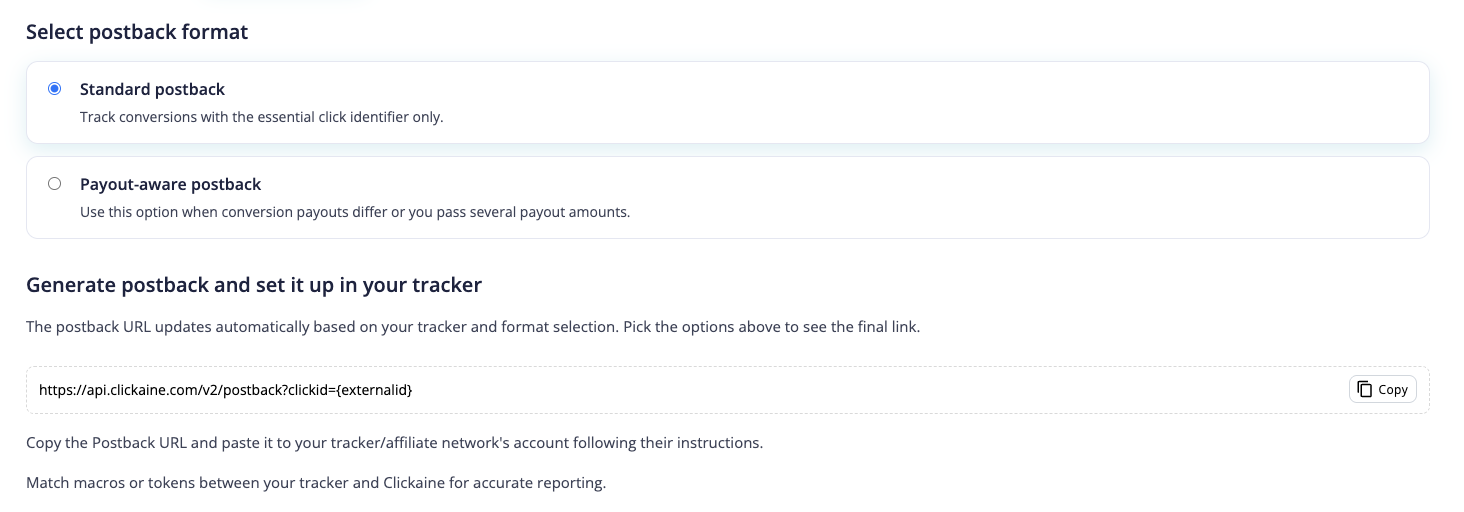
Example:
https://api.clickaine.com/v2/postback?clickid={externalid}
Each click gets a unique ID. When a conversion happens, that same ID is sent back — allowing the system to match conversions to clicks.
This is the foundation of server-to-server (S2S) tracking.
Clickaine supports:
- Standard postback (basic tracking)
- Payout-aware postback (for variable payouts)
Once configured, conversions appear in Clickaine stats. But the real power comes when you connect it to Binom.
Connecting Clickaine with Binom
In Binom, you generate a tracking link and use it in Clickaine instead of your raw offer URL.
The key here is parameters.
Clickaine uses macros to pass data into Binom. These parameters show exactly where your traffic comes from, and Binom already includes a ready-to-use template.
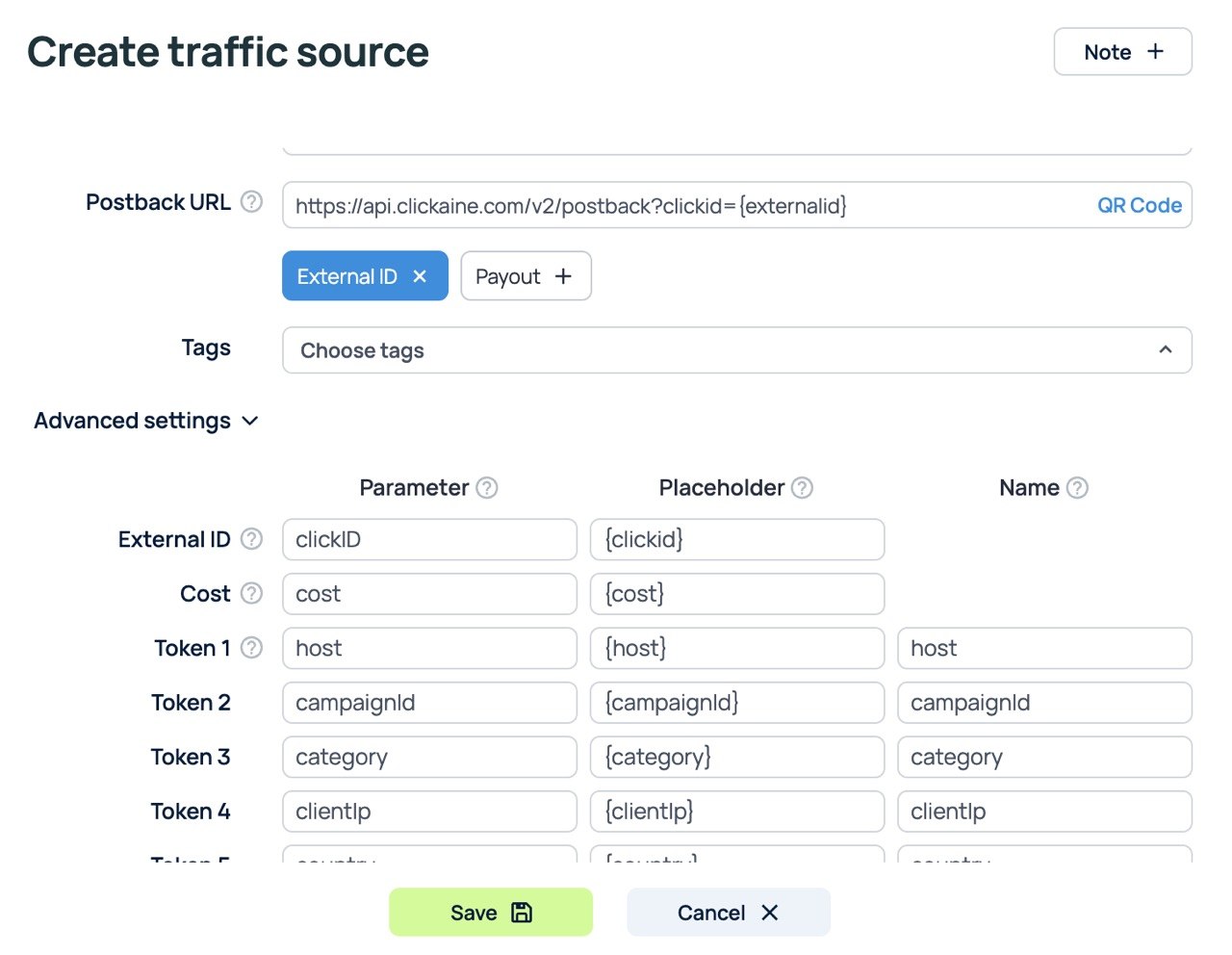
Example:
http://your-binom-domain.com/click?campaign=123&zoneid={zoneid}&country={country}&device={device}&cost={cost}&clickid={externalid}
Now every click carries:
- placement data
- GEO
- device type
- cost
- unique click ID
How Conversions Are Sent Back
When a conversion happens, Binom receives it first — then sends it back to Clickaine via postback.
Example setup in Binom:
https://api.clickaine.com/v2/postback?clickid={externalid}&payout={payout}
Flow:
- User clicks an ad in Clickaine
- Clickaine assigns a click ID
- Traffic passes through Binom
- User converts
- Binom receives conversion data
- Binom sends it back to Clickaine
- Clickaine matches conversion to the original click
Result:
- Binom → deep analytics & ROI
- Clickaine → conversion data in campaign stats
What Changes Once Tracking Is Live
At this point, your campaign stops being a black box.
You no longer ask:
“Is this campaign profitable?”
Instead, you ask:
- Which placements are profitable?
- Which ones should be cut?
- Where should I increase bids?
That shift is what separates beginners from experienced media buyers.
Optimization Becomes a System
With data in place, optimization becomes logical — not intuitive.
You’ll quickly see:
- which placements bring conversions
- which ones burn budget
From there:
- cut the losers
- scale the winners
Then comes real scaling:
- increase bids on profitable placements
- test similar GEOs
- duplicate winning setups
Growth becomes predictable.
Common Mistakes to Avoid
Even with tracking, many advertisers fail.
The most common mistakes:
- focusing only on overall campaign stats
- ignoring granular data
- scaling too early
A campaign can look “average” while hiding both strong winners and heavy losses inside.
Tracking gives you answers — but you still need to read them правильно.
Ready to Launch?
Clickaine gives you scalable traffic.
Binom gives you control over it.
Together, they create a system where:
- every click is tracked
- every conversion is matched
- every decision is data-driven
That’s when affiliate marketing stops being risky — and starts being scalable.
🎁 Exclusive Bonuses for Binom Users
Clickaine bonus:
Get $50 extra on your first deposit with code BINOM50
(just share it with your manager)